
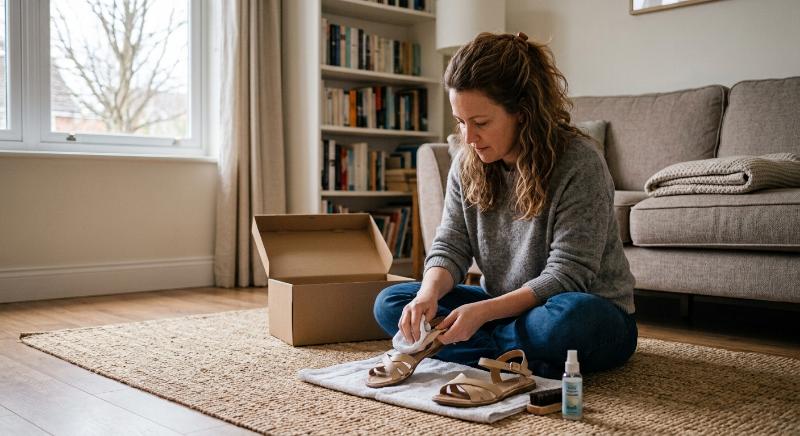
The first cold day in September always arrives before you’re ready. The sandals are still by the door, the boots are still somewhere at the bottom of the wardrobe, and between them is that one week when summer gets packed away. Most of us do it in a hurry: everything into one bag, the bag on top of the wardrobe, and see you in May.
That bag is exactly where summer footwear suffers most. How to store sandals over winter, along with espadrilles, canvas sneakers and flip-flops, depends on the material, because summer footwear is put away differently from shoes, and each summer material differently from the rest. At the Yonso workshop we pack sandals away every autumn, so here’s how we do it, pair by pair.
Before the box: clean and dry down to the last thread
One step applies to everything that was on your feet this summer: only clean and completely dry footwear goes into the box. Dirt that winters on the material becomes a stain by spring, and moisture sealed in a box becomes mold within a couple of months. So clean each pair first, then leave it for a day or two to air-dry in the shade, and only then pack it.
Each material is stored differently
Leather sandals
Leather is the only summer material that keeps living through the winter: it breathes, absorbs and releases moisture, so its packaging has to let it breathe too. Before packing, check what kind of leather you’re dealing with, because pre-winter care depends on the type. Smooth leather likes a thin layer of nourishing cream on the footbed and straps, sanded leather (suede and nubuck) needs only a rubber brush and a spray for sanded leather, and patent leather is fine with a damp cloth. We’ve explained in detail how to clean and nourish each of these types after summer in our guide to leather footwear care, and for winter storage the short rule is: a clean pair, care by leather type, then into a cotton bag or cardboard box. A plastic bag is out of the question, not even for one night.
The second question is shape. Leather footwear left empty for months tends to sag or bend, so fill closed leather shoes, loafers and sandals with firm leather straps with crumpled white paper or put them on a shoe tree, so the upper keeps the shape of the foot. With sandals that have elastic straps, the opposite applies. The women’s sandals in our collection are made of natural leather with elastic straps, and those winter best just the way you took them off: relaxed, without twisting or stretching, so the pair can fit in a smaller box, and without paper or shoe trees keeping them taut for months.
Espadrilles and canvas sneakers
Jute and canvas are the first to go moldy, because they soak up moisture like a sponge and hold it for a long time. Wash them, then let them dry until the jute sole is dry to the touch, not just to the eye; that can take two days. Crumpled plain white paper keeps their shape, because newspaper leaves a print on light canvas. Choose a box with a lid or a cotton bag, away from the floor, which draws cold and damp in winter.
Rubber flip-flops and plastic sandals
The only summer footwear that doesn’t mind a plastic box. But rubber remembers heat and sun: it fades, gets sticky and cracks. Washed and dry, they go into a box, as far as possible from radiators and windows.
Where summer footwear spends the winter at home
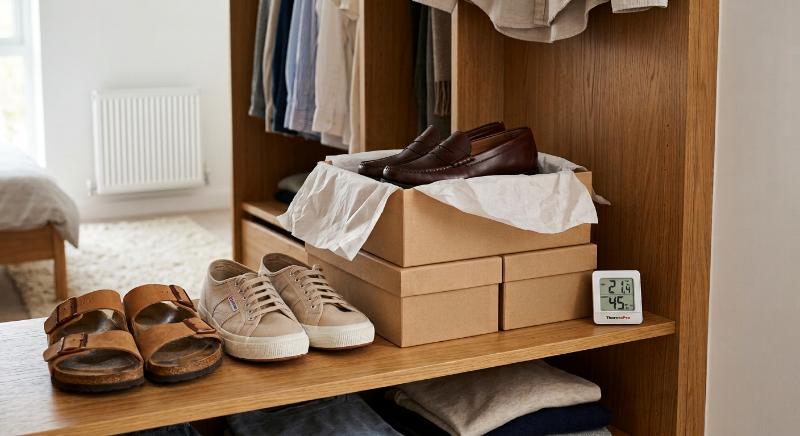
A winter storage spot has three conditions: no sun, no damp and no sudden temperature changes. Our workshop rule is 10 to 25 degrees Celsius, which in practice means a wardrobe in a room, not the attic or the basement. The most common mistake is a dresser or wardrobe right next to a central heating radiator, which dries out leather and crumbles rubber all winter long.
Humidity, fortunately, can be measured, and the rule is simple: footwear likes the same humidity you do. The US Environmental Protection Agency recommends keeping indoor humidity between 30 and 50 percent, and if your room feels pleasant, without stuffy damp and without the dry radiator air that burns your throat, your summer footwear will winter well there too. If in doubt, buy a hygrometer that measures humidity; it costs about as much as two coffees. And if you really love your pair and want to give it some attention, open the box once during the winter, take a look at the pair and let it breathe for an hour.
Spring awakening
When the first warm day lures the box down from the top of the wardrobe, don’t put the pair on right away. Give it a day in the fresh air, run a brush over the leather, and only then take your first step. Yonso sandals are made to last many summers, and these five minutes in September are the best way to make sure they’re ready for each new one. Pack them carefully. See you in May!