
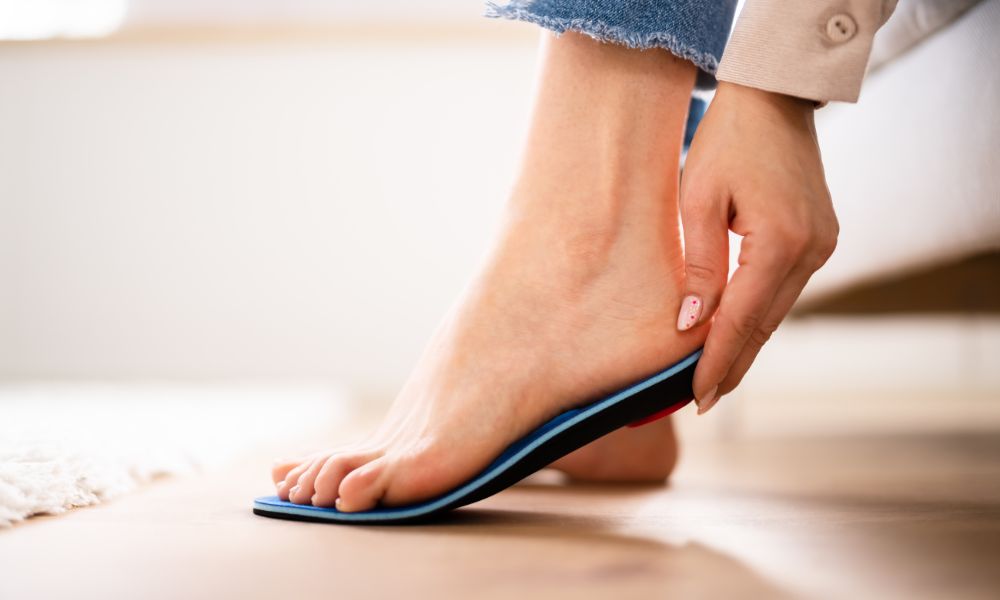
Thirty-seven or thirty-eight? It’s funny how hard that question can be. You found the model in five minutes, the color goes with everything waiting in your wardrobe, but the dilemma over which size to pick is still there.
The question of how to choose your shoe size when buying online has a simple answer: you can calculate it and measure it. All you need for the measurement is minimal equipment: paper, a pencil, a ruler and five quiet minutes. In this guide we go all the way, from your foot on paper to the size chart, with a few rules that work differently for sandals than for closed shoes.
Table of Contents
Step 1: How to measure your foot
Your feet change throughout your life, with weight, mileage and age. That’s why most people wear the wrong size: a review of studies found that between 63 and 72 percent of us walk in shoes that don’t fit our feet in length or width. So measuring pays off even when you think you know your size.
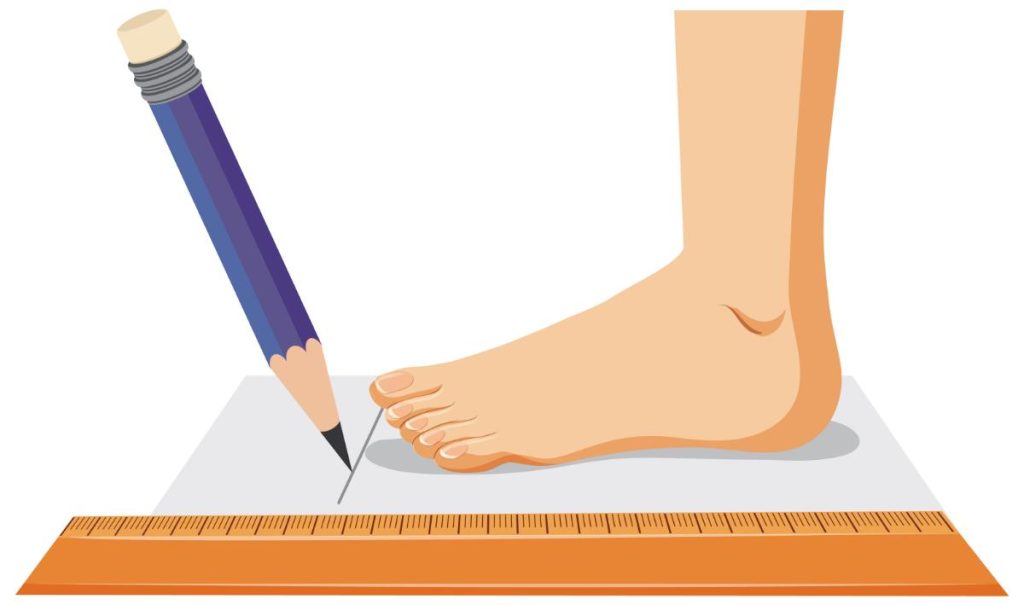
Measure in the evening, when your foot is at its largest after a full day. Place a sheet of paper on a hard floor against a wall, then stand on it with your heel against the wall. Hold the pencil upright and draw a line at the tip of your longest toe (for some people it’s the big toe, for others the second toe). Use the ruler to measure the distance from the edge of the paper to the line and write it down. Then repeat everything with the other foot, because almost no one has two identical feet; the larger foot decides.
Step 2: From centimeters to size: how to read a size chart
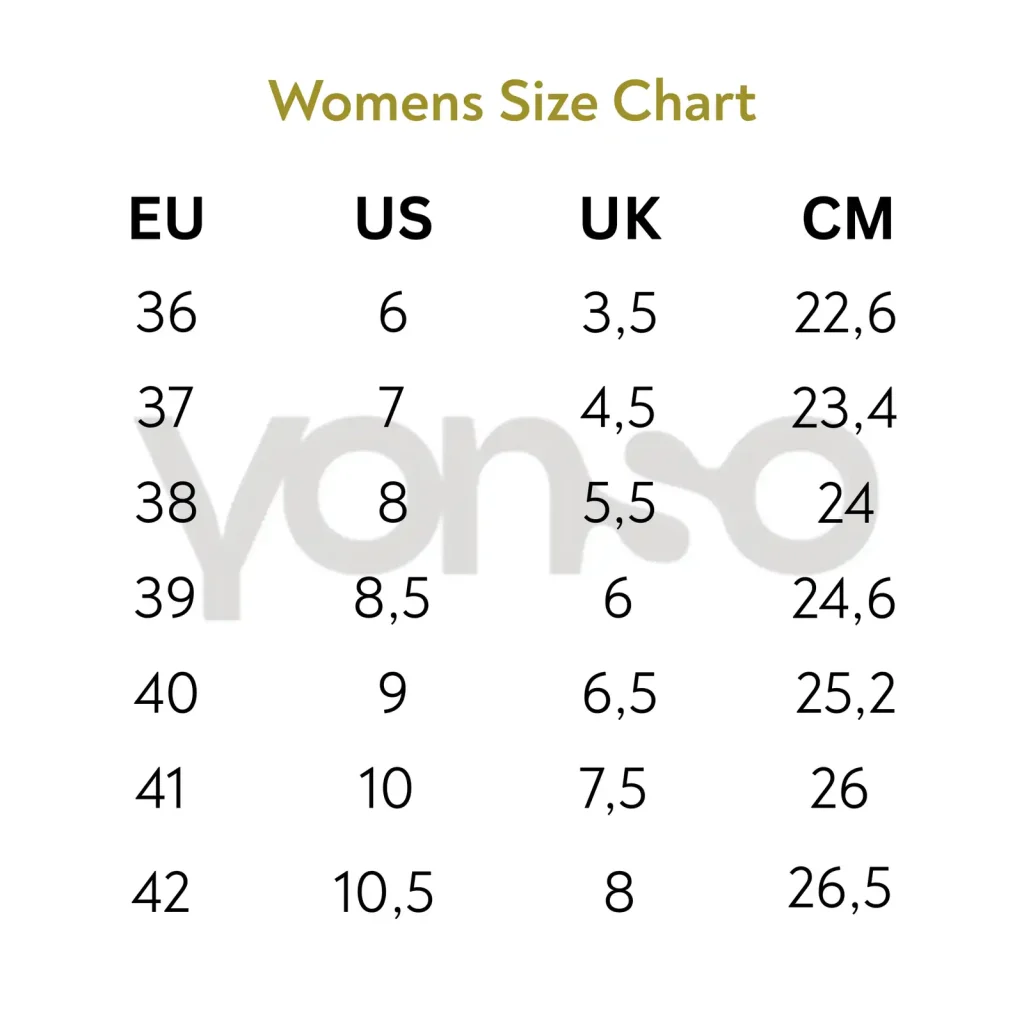
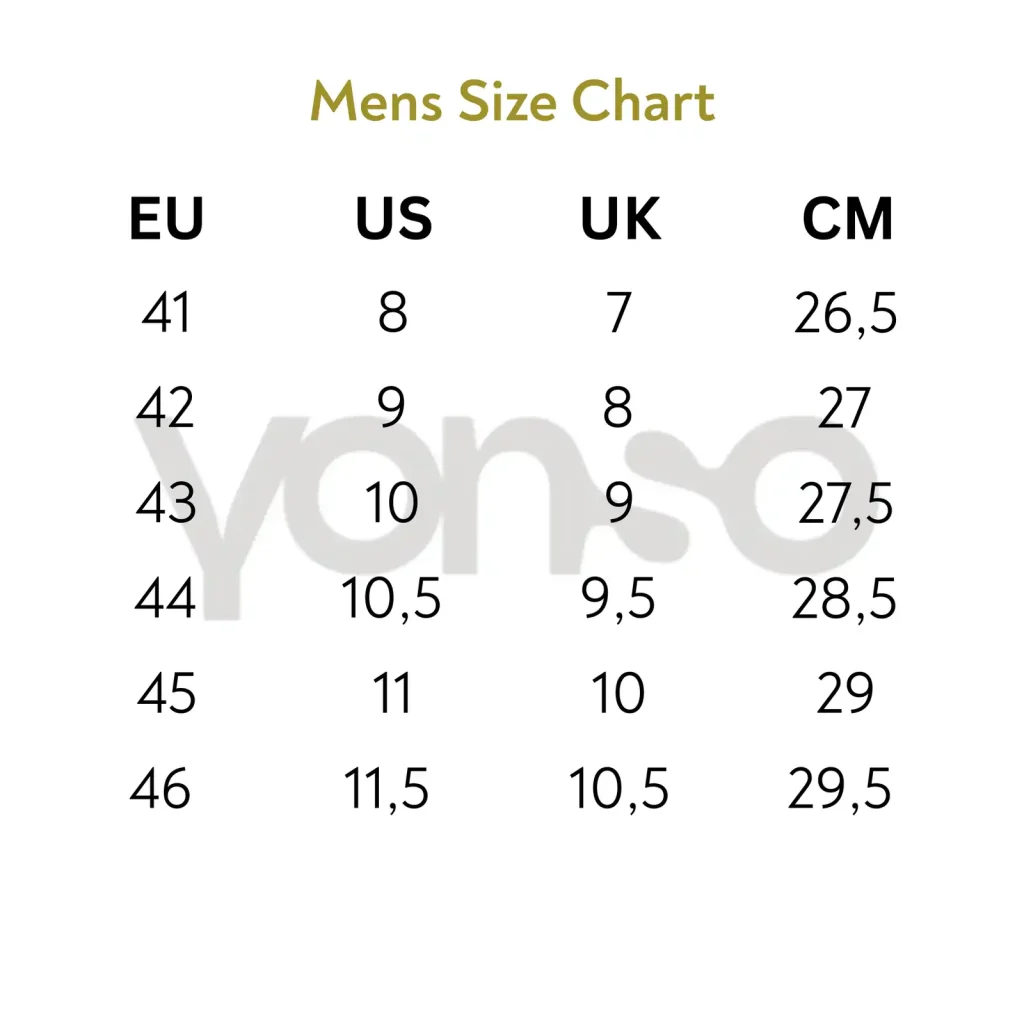
A shoe size chart is a little dictionary that translates centimeters into sizes, and that’s where the catch lies that makes so many people get it wrong. Sizes come in three systems: European (EU) sizing counts in Paris points, steps of two-thirds of a centimeter, while British (UK) and American (US) sizing count in thirds of an inch, each with its own starting point on the scale. That’s why the same sandal is listed as 39, 6 and 8.5 on a chart, and exactly why centimeters are the safest thing to rely on. The number you measured is the length of your foot, while the CM column in the chart is the length of the footbed, the space your foot needs to fit into. Between the two goes some air: 6 to 12 millimeters of room in front of your toes.
Take the Yonso chart as an example. A 23.8 cm foot with that margin needs a footbed of about 24.4 to 25 cm, and the closest in the chart is 24.6. That’s a size 39. The same calculation applies to all women’s sandals in our collection, in sizes 36 to 42, while the men’s chart runs from 41 to 46.
Step 3: Same size, different shoes
If every footwear brand measured the same way, this would be a much simpler story. Each brand cuts to its own last, so footbeds of the same size can differ by as much as 26 millimeters. That’s a difference of almost two full sizes. That’s why the centimeters in the chart of the brand you’re buying from matter more than the size you usually wear.
The material has its say too. Natural leather adapts to your foot over time and moves with it as you walk, while synthetics stay the same as on day one. If you’re not sure what the pair you’re looking at is made of, we’ve already written about how to recognize genuine leather before you pay.
Step 4: Sandals have their own rules
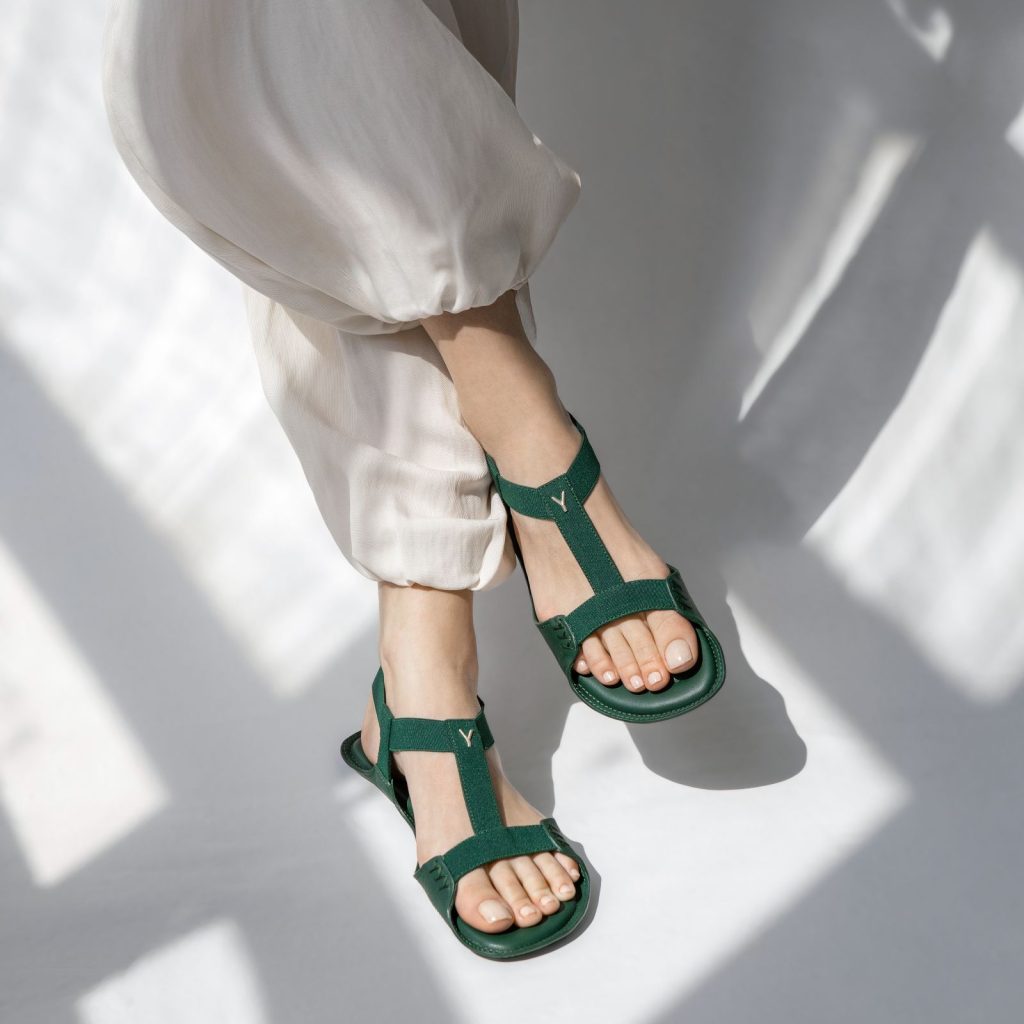
Most sizing guides are written for closed shoes, so they advise an extra centimeter for a winter sock. With sandals a simpler rule applies: the whole foot on the footbed. Toes and heel stay inside the edge, and if you’re unsure about the room in front of your toes, six millimeters is quite enough. The straps hold the foot steady without leaving marks on your skin after a full day. The same rules apply to the men’s sandals collection.
Step 5: Between two sizes?
Of course, sometimes your foot refuses to cooperate, and 24.9 cm lands right in the middle of the chart. With closed shoes the dilemma is easy: go up a size, and the sock and insole even out the rest. With sandals, the shape of your foot decides. A wider foot, a higher instep and a more prominent heel change how a size fits, and no chart can see that. A real person can: that’s why Yonso support is always there. Measure, get in touch, and together we’ll get the size right the first time.

The size you forget about
You only notice the right size when you get it wrong. A pair that truly fits quietly does its job: it carries you from your morning coffee to your evening walk, and you think about everything except your shoes. If you trust a try-on more than a ruler, you can also try Yonso sandals in person at our stores in Belgrade, and if the size you ordered still pinches or slips, we’ll exchange it, no drama.