
It’s summer, the shop windows are full of sandals, and every other label says the same thing: leather. It says so on the ones for 2,000 dinars and on the ones for 15,000. It says so when it’s true and when it isn’t. And there you are, standing over the box, running your finger along the strap and trying to remember that water-drop trick you read about somewhere.
Knowing how to recognize genuine leather is a skill you can learn, and faster than you think: a few signs on the label, on the reverse side and on the surface of the leather itself are enough to read footwear like a shoemaker. Once you’ve mastered them, no “leather” on a label will ever fool you again. Let’s go step by step, from the material to that moment at the checkout when you no longer wonder whether the sandals are worth what they cost.
Table of Contents
Types of leather footwear
When a sandal says “leather”, it can mean several quite different things. Smooth natural leather is the classic: a surface with tiny pores that only gets more beautiful over the years. Nubuck and suede are also genuine leathers, just sanded, so they have a velvety texture and a slightly more delicate nature. Patent leather is genuine leather under a glossy coating. For summer footwear, smooth leather is the most common choice, because it handles both the heat of the city and all kinds of surfaces if you spend your summer somewhere away; our women’s leather sandals, for example, are made from it.
On the other side are imitations. What’s sold today as “eco leather” is usually polyurethane or PVC applied to a textile backing, the material our mothers used to call leatherette. There’s also bonded leather: scraps of real leather ground up and pressed together with glue. None of that is anything to be ashamed of. The only shame is when you’re charged for it as genuine leather.
What you get when the leather is genuine
Genuine leather breathes, letting air and moisture through, so your feet stay dry. It adapts: after a week of wear the straps remember the shape of your foot, as if they’d been cut to it. And it ages beautifully. Natural leather develops patina and character over time, while an imitation peels and cracks after a season or two, usually right at the crease where the sandal bends the most.
You can’t see that difference in the shop window, but you feel it after just a couple of hours of walking. That’s why Yonso uses only leather that bends with the foot and moves with it in every step.
Labels and pictograms: what your footwear has to tell you
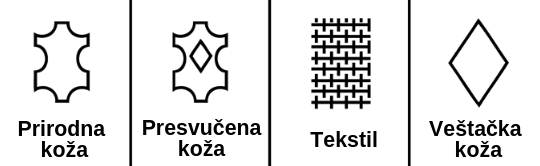
The strongest evidence comes with the sandal, on the label. All footwear sold in Serbia must, under the regulations, carry a label with pictograms for its three main parts: the upper (outside), the lining and sock (inside), and the sole. The material is marked with one of four symbols: leather (a stretched animal hide), coated leather (the same symbol with a diamond), textile, or other materials. The leather symbol may only be used if leather makes up at least 80 percent of that part of the shoe. And a detail few people know: under European rules, leather may only be called leather if its surface coating is no thicker than 0.15 millimeters. Anything thicker is coated leather, and it has to say so.
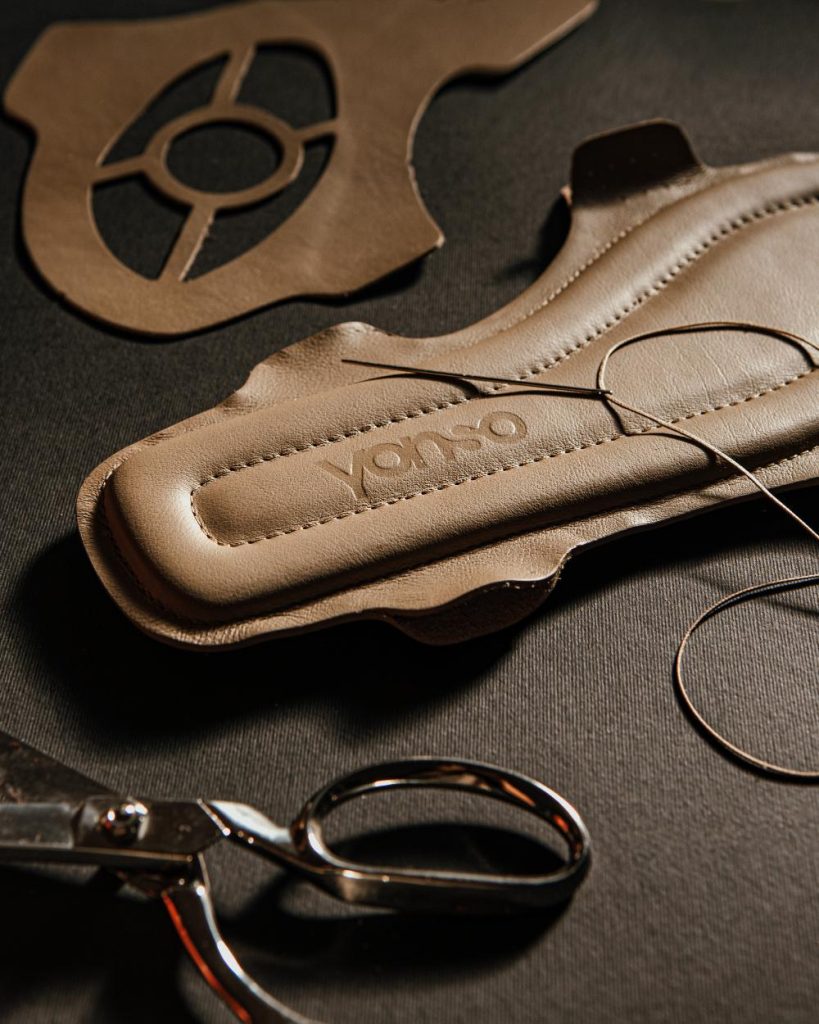
If you’re buying imported footwear, a mini glossary: “full grain” is the top of the range, whole leather with an untouched surface. “Genuine leather”, however convincing it sounds, denotes the lowest grade of real leather. Marketing is imaginative. On the label of handmade full-grain natural leather sandals, like the ones that leave the Yonso workshop, the leather pictogram appears on both the upper and the lining.
How to recognize genuine leather by hand
The label is the starting point, but a sandal in your hand can tell you even more. You’ll need these signs when there’s no label, when you don’t trust it, or when you simply want to confirm what the paper promised.
The edge, the reverse side and the backing
Turn the sandal over and look where the design doesn’t reach. The edge of genuine leather should be fibrous and a little untidy. The reverse side is warm and velvety, similar to suede. An imitation gives itself away on the back: fabric, mesh or something paper-like peeks out from under the coating, and the edges are smooth and uniform as if they’d been molded. With sandals this check is especially easy: the straps are thin and the reverse side is literally in the palm of your hand.
Texture, pores and how it bends
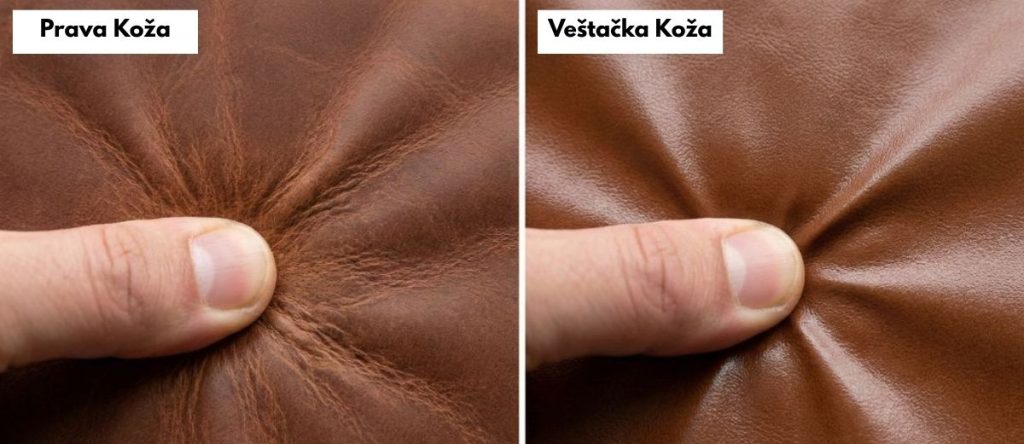
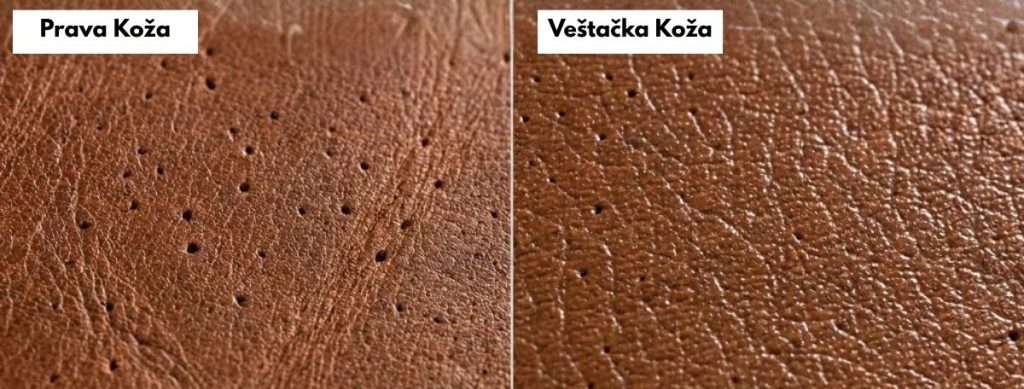
Leather was once a living material, and it shows. A genuine surface has pores, tiny scars and a pattern that never repeats. If the grain is perfectly regular, a machine printed it. Next, bend the strap: genuine leather creases finely and naturally, like the skin over a knuckle, and then smooths out. An imitation either folds into one thick crease or stays stiff. Try touch, too. Leather warms up quickly under your fingers, while plastic stays cold.
Smell, water and myths you shouldn’t believe
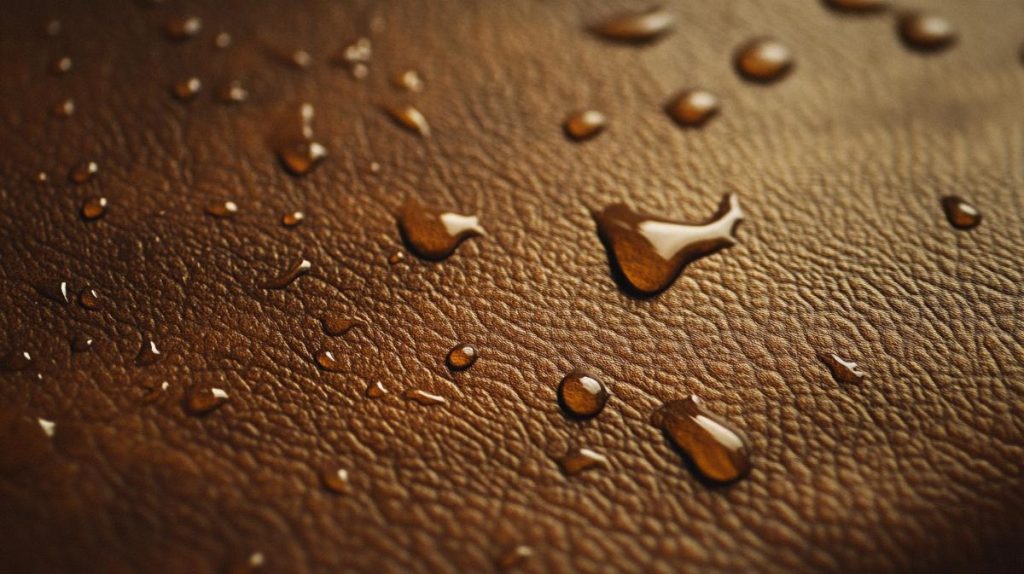
Smell is an honest witness: genuine leather smells deep and warm, while an imitation smells of chemicals or of nothing at all. Now, the myths. The water-drop test, an internet favorite, regularly lies on modern footwear: most genuine leather today has a protective finish, so the drop sits on the surface just like it would on plastic. So the fact that water doesn’t soak in proves nothing. We won’t even seriously mention the burn test; no salesperson loves a customer with a lighter. And price tells its own story: suspiciously low almost always means imitation.
How to shop with more confidence
Next time you’re standing over a box of sandals, you’ll know exactly what you’re doing. First you look for the label, and only then at the color. You turn the strap over to see the reverse side, run your finger over the pores and, if you really need to, discreetly give it a sniff. You might get a strange look from the salesperson. It’ll be worth it.
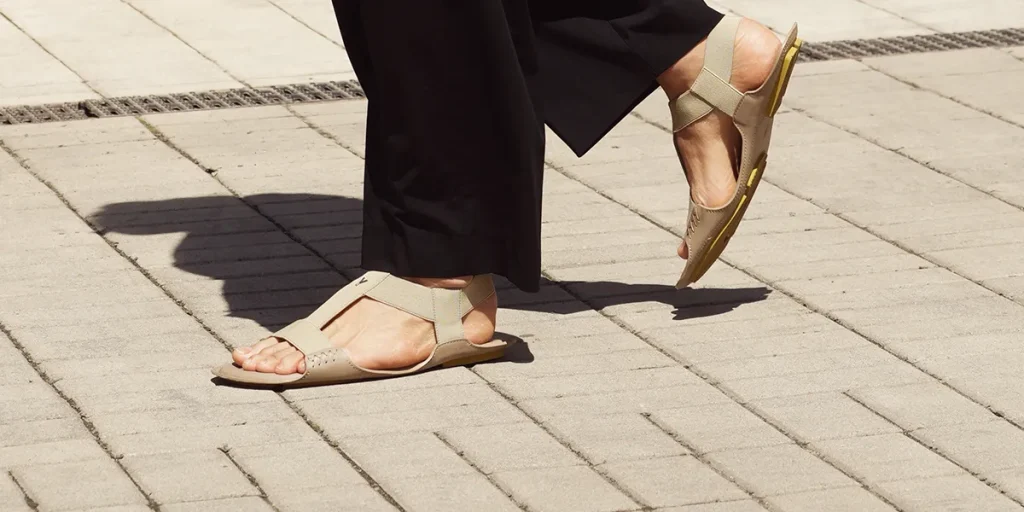
The same signs apply when you’re not choosing for yourself. Men are the most appreciative audience here: they usually judge footwear precisely by quality and durability, and they feel the difference before they even look at the label. If you’re choosing a pair for him, or he’s choosing his own, men’s leather sandals from our workshop are made exactly to that standard: cut, stitched and inspected by hand, from leather that has every right to that name. Yonso doesn’t prove its quality on the label, but in the years a pair of sandals lasts.