
Admit it: when you’re choosing shoes, your hand reaches for black on its own. It’s safe, it asks no questions, it goes with everything. But then summer arrives, your wardrobe blooms into dozens of colors, and you realize half your outfits still don’t work. That’s where combining clothing and footwear colors comes in, a skill that’s easier to learn than you think, and it saves both time and money, because you stop buying pieces that go with nothing.
Color science left the design studio a long time ago. Banks dress in blue because blue inspires trust, eco brands in green, fast food in appetite-stirring red. Fashion has taken that logic to perfection. Let’s put it to use.
Is there a shoe color that goes with every outfit?
Short answer: there’s no single magic color, there’s the right color for you. It depends on your skin tone, the colors that already dominate your wardrobe, the materials, and the occasions you’ll wear the shoes for. These are all personal things, so below we’ll walk through the logic that helps anyone find theirs.
And it’s worth the effort. Your outfit is the first thing people notice, often before you’ve said a word. When colors work for you, they present you exactly as you are. Investing in your own style isn’t wasted time; it’s the shortest route to a good first impression.

Color science in the fashion industry
It all starts with the color wheel, which Isaac Newton sketched back in 1704. The wheel arranges colors by kinship, and from it you can read three schemes that solve nine out of ten fashion dilemmas:

- Complementary colors sit opposite each other on the wheel (blue and orange, red and green) and give the strongest contrast. Ideal when you want your shoes to be the star of the outfit.
- Analogous colors are neighbors on the wheel (beige and brown, blue and green) and create a calm, natural harmony.
- A monochromatic scheme layers shades of the same color, from lighter to darker, and always looks deliberate.
Along with the wheel comes a rule stylists repeat like a mantra: no more than three colors in an outfit, distributed roughly in a 60-30-10 ratio. Shoes are usually that 10 percent, the accent that takes the whole look in the direction you want.
And let’s clear up one misconception: perfect matching isn’t the goal. A study published in PLoS ONE, in which 239 participants rated fashion combinations, found that moderately coordinated colors look the most fashionable. Not matchy-matchy, not chaos. The golden mean.
Combining clothing and footwear colors in practice
Theory is nice, but it’s best learned through examples. At Yonso we take color combining seriously: no shade in the collection is accidental, each one has been through these rules, from its position on the color wheel to the question of how many wardrobes it will actually work with. That’s why we’ll show a few mini scenarios using our women’s sandals in neutral and accent colors. Find yourself in one of them:
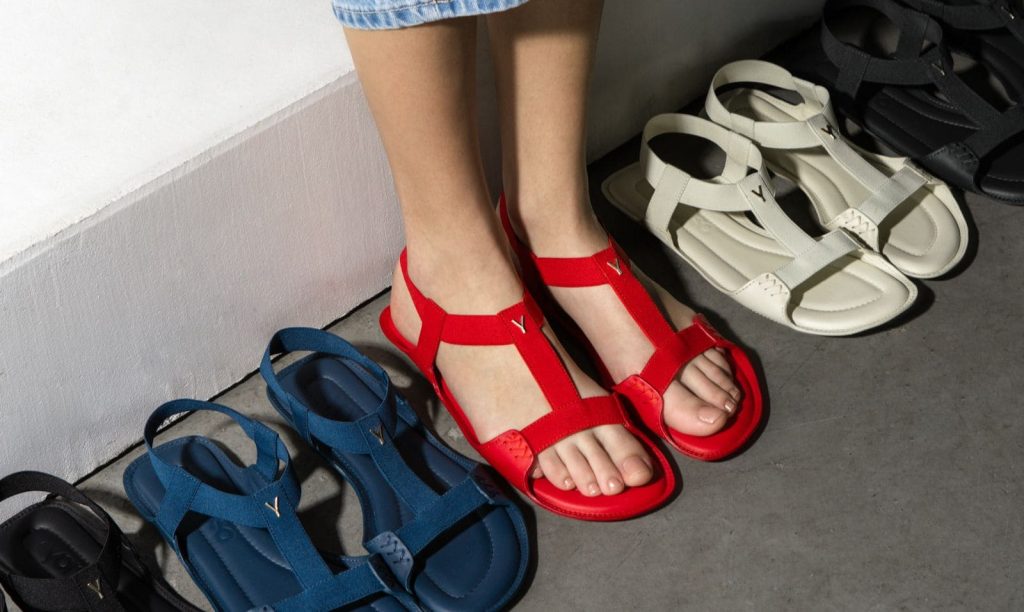
Cream White is the base for minimalists. With a linen dress it breathes, and with a sharp black blazer it gives off that true Scandinavian subtlety that’s always a good choice. Monochrome magic for bright summer days.

Voyage Beige loves earth tones and denim. An analogous harmony of sand and brown shades, spiced up with wooden details, looks expensive with minimal effort.

Black is Black is the anchor of urban outfits. Black trousers, a camel jacket, a black sandal: three elements, zero dilemmas, ready for both the office and the city.

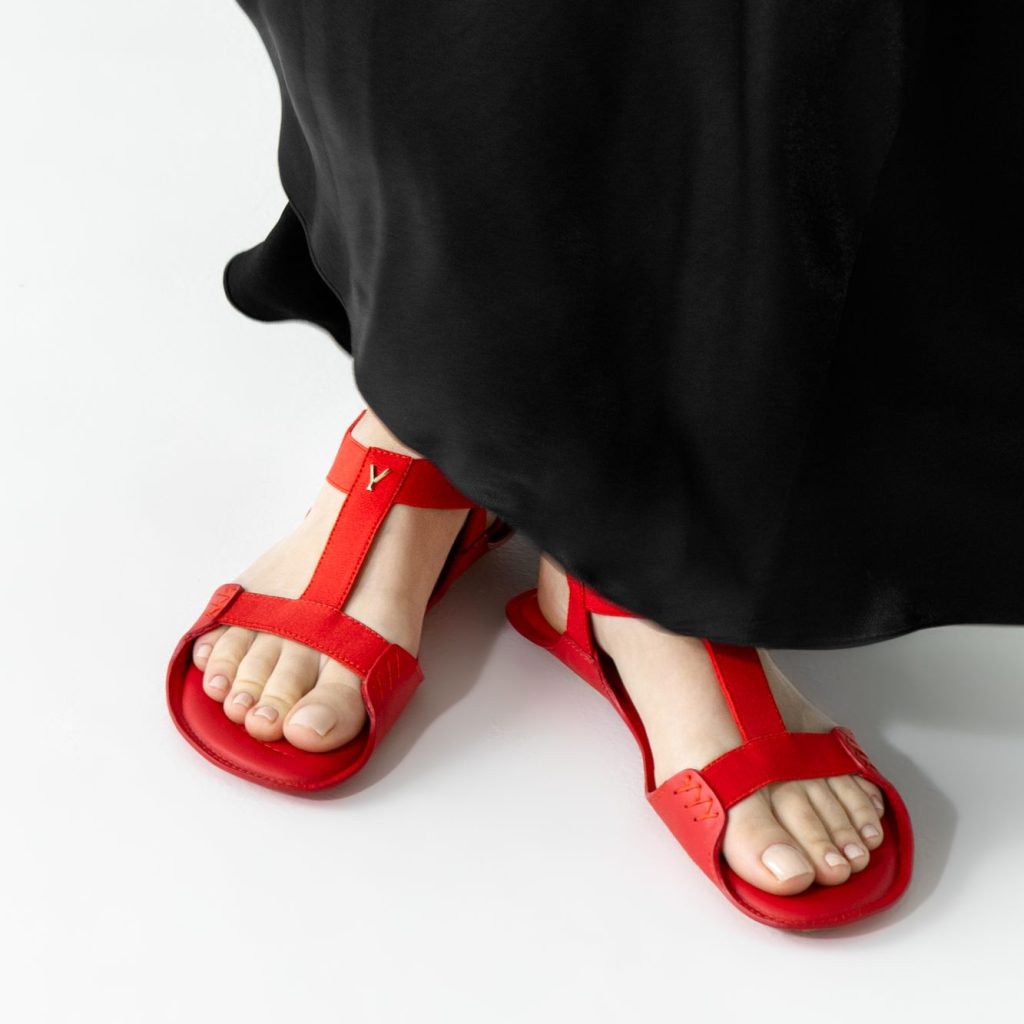
Bold Red is the 10 percent from the rule. Let the base stay quiet, say with a simple black dress or a white shirt, and let the red walk into the room first.
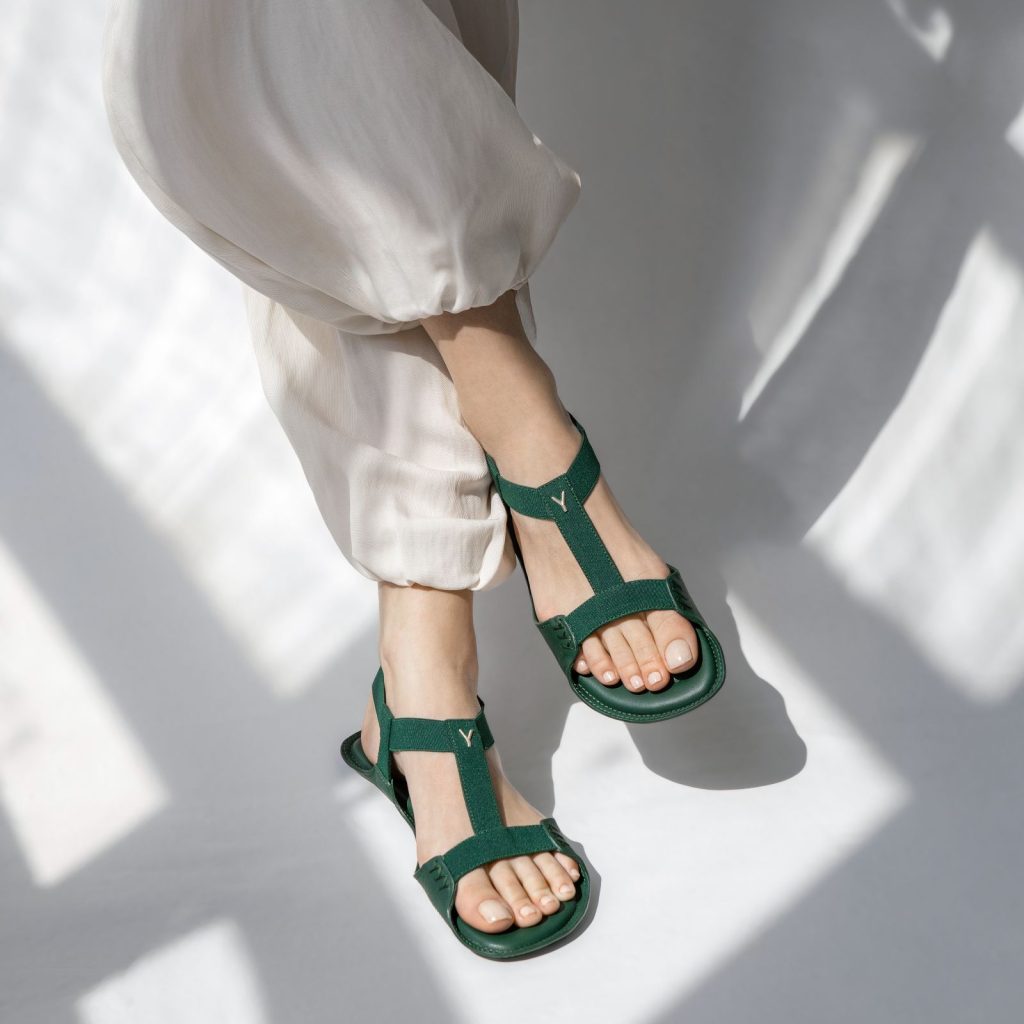
Deja Vu Blue and Kashmir Green are the cool side of the palette. Blue was born to go with light denim and white; green brings freshness to cream trousers, and with pink details it creates a textbook complementary contrast.
How to choose one or two pairs for the whole summer
If you remember just one move from all of this, make it this one: open your wardrobe and honestly count which three colors dominate. Choose your first pair in a neutral that matches (white, beige or black), because it covers ninety percent of situations. Your second pair, if the budget allows, should be an accent, in a color that looks good with your base across the color wheel. With those two pairs, every summer morning has one less dilemma. And one more criterion before you buy: color is half the decision, the other half is comfort, because a pair that rubs stays in the box no matter how good it looks. We’ve already written about how sandals combine comfort and style all summer long.

A color that represents you
The right color doesn’t shout, it represents. Remember three things: a neutral base, one accent, moderate coordination instead of perfect matching. The rest is play. And if you run short on inspiration, the Yonso sandal palette we’ve talked about, from Cream White to Kashmir Green, is already waiting to lead your summer in your colors.