

Why it matters to know how your sandals are made
Before they take their first step with you, Yonso sandals have already come a long way.
In a time when everything is made fast, we decided to slow down and give every pair the attention it deserves. Because when you know how something is made, you also know why it’s worth it.
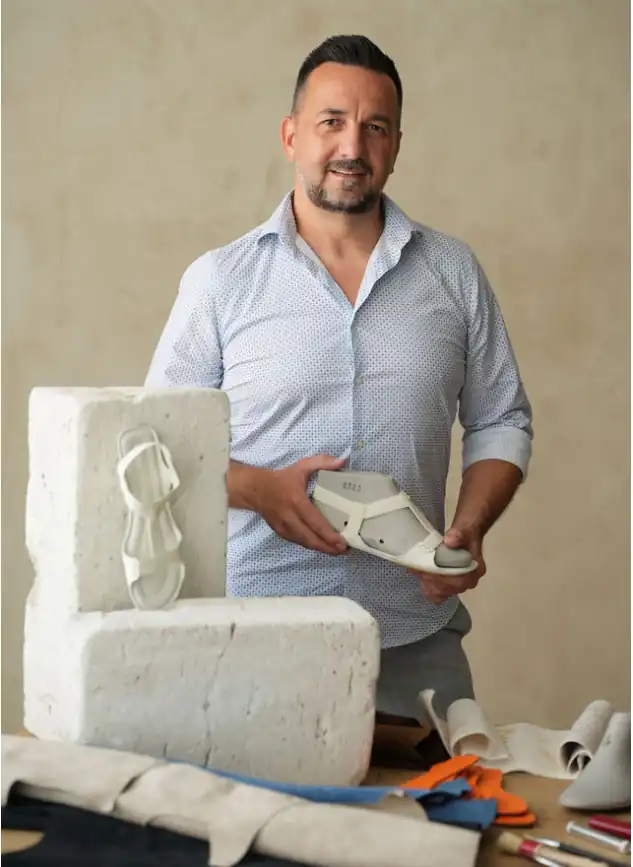
This article takes you behind the scenes, where the smell of natural leather mixes with morning coffee, where the craftsman’s hands measure in millimeters and every stitch has its reason. This is the Yonso production process, the story of how handmade sandals come to life, sandals that don’t follow trends but your character.
Design and idea: from a feeling to a sketch
It all starts with a question: How can sandals follow your movements instead of restricting them?
Our creative team doesn’t design “collections” but experiences; the goal is comfort you can see. Yonso design isn’t there to change your style but to understand it.
We combine minimalist aesthetics with the functionality of an ergonomic shape. The result? A silhouette that looks like it’s been yours since day one.
Choosing materials: this is where quality begins
True comfort starts at first touch, because comfortable women’s sandals need materials that breathe with you. We choose natural and eco leather that bends with the foot, not against it. The textiles we use are light, durable and pleasant to the touch; every layer has a purpose and none is chosen as mere decoration.
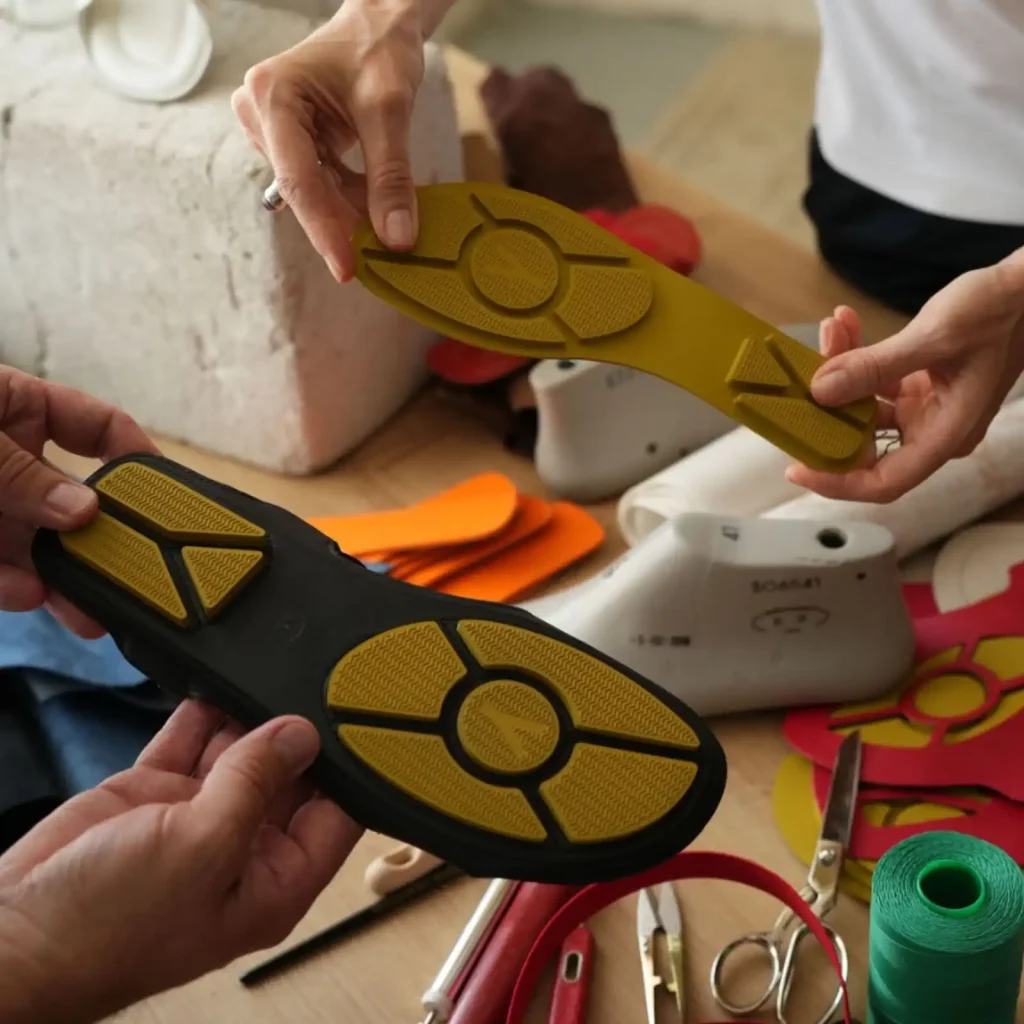
The insole is soft but firm. The sole is flexible but stable. And everything is selected by hand, piece by piece, because we believe durability begins with care.
Production – step by step
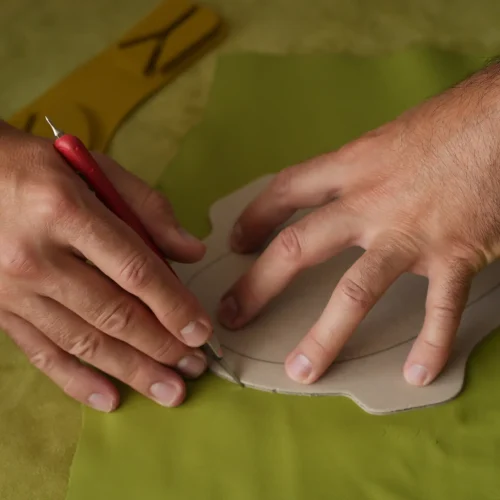
In the workshop, every day begins with the sound of a blade cutting leather, precise and calm, as if it were an art form. There’s no automated speed here. There’s the rhythm of hands.
- Cutting and shaping: every part of the sandal is cut by hand, following the pattern.
- Hand and machine finishing: edges are shaped, the surface is softened, lines become clean.
- Assembly and stitching: craftsmen join the pieces with fine stitches, checking the thread tension as they go.
- Quality control: every pair passes through several pairs of hands until everything sits exactly right.
No two sandals are the same. Each one has its own signature, because handcraft doesn’t copy, it creates.
Handmade vs. industrial: a small workshop, a big character
Mass production creates uniformity. Yonso creates personality.
In a time when machines make more than people do, we choose the opposite path. Our craftsmen don’t measure time in batches but in pairs. Every step of the process is a small ritual, from the stitching to the final polishing of the sole.
That difference isn’t only visible on the sandals. You feel it when you wear them.
Sustainability and responsibility: respect for every step
At Yonso we believe sustainability isn’t just a trend but a way of treating materials, the planet and the people who create. We use sensible quantities, recycle leather and textile offcuts, and turn every surplus into new ideas rather than waste.
We don’t make too much. We make enough. Because we believe that less, but better, always lasts longer.
Quality you can see – trust that’s built
When you know your sandals have passed through someone’s hands rather than down a conveyor belt, you start to see them differently. Not as a trend, but as something personal, made just for you.
That’s why the story of the Yonso production process is more than a technical description. It’s proof that authenticity still exists, and that things with soul are still being made in Serbia.
Because quality isn’t promised. You feel it, with every step.